Best Potting Soil for Tomatoes
The right potting soil makes the difference between watering daily and watering every few days. Look for bags that say "potting soil" or "potting mix"—these terms mean the same thing.
What to Look For
Check the ingredients list on the bag. The first ingredient should be either sphagnum peat moss or peat moss. That's it. That's the secret.
Why does this matter? Water holding capacity. Soil with sphagnum peat moss or peat moss as the top ingredient can hold up to 25 pounds of water. It acts like a sponge around your roots.
You'll Save on Water
With good soil, you might water every 3-4 days instead of daily. Your soil stays moist all the way to the top and down the sides. Roots die when soil dries out. Fewer roots mean a smaller plant, and a smaller plant means fewer tomatoes.
What to Avoid
Cheap potting mixes list "processed forest products" or "recycled forest products" as the first ingredient. That's ground-up brush and tree branches—leftover forest products. Much cheaper to fill a bag with wood chips than quality peat moss.
This cheap soil dries out fast. You'll water daily just to keep plants alive. Dry soil kills roots. Small root zone means small plant. Do you want to be known as the "Bonsai tomato person"? Plants only a foot or two tall because of tiny root systems?
Use a 20-25 gallon pot or dig a big hole and fill it with great potting soil. We want massive root zones that produce big tops with lots of fruit.
Dave's Brand Recommendations
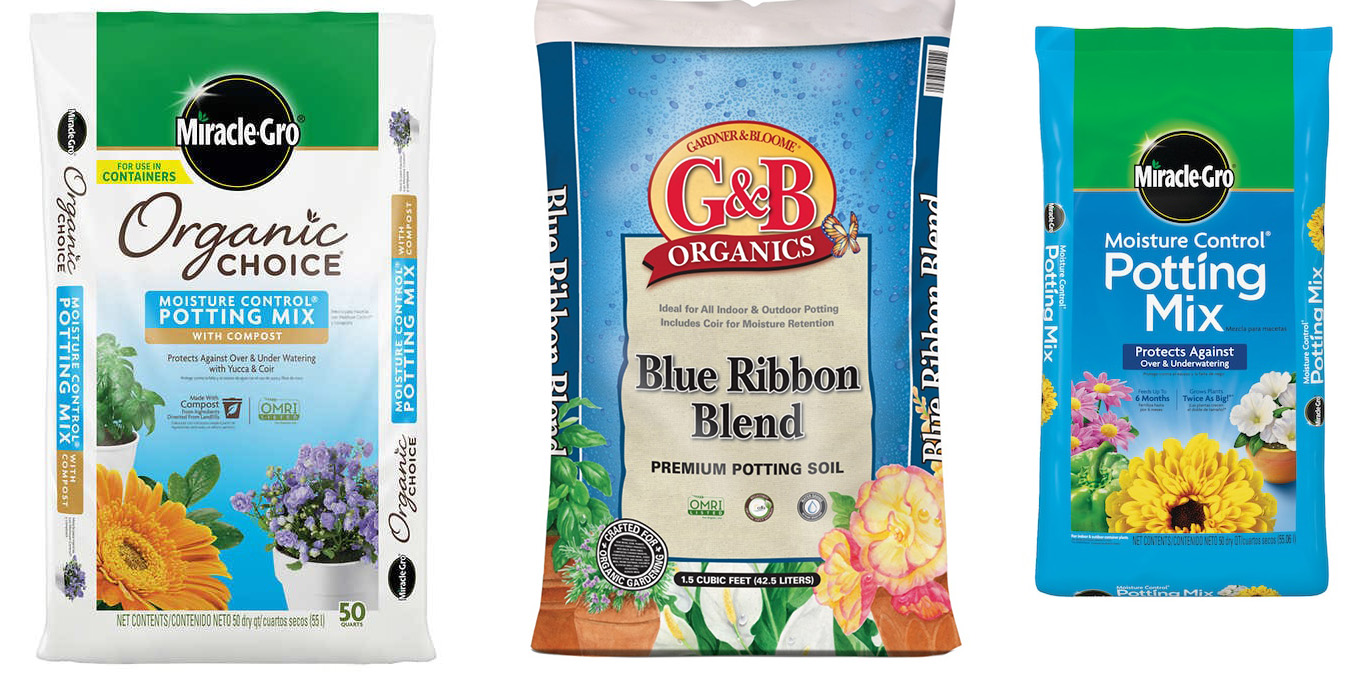
1. Organic Choice (Costco) - My top pick. Great quality at about half the price of others. Available in spring. Stock up when you see it.
2. G&B Organics Blue Ribbon (Kellogg's) - Found year-round at nurseries and big box stores. Consistently good.
3. Miracle-Gro (blue bag) - For those not concerned about organics. Excellent product available at Home Depot and Lowe's, but costs almost double what Costco charges.
Can't Find Good Soil? Make Your Own
When quality potting soil isn't available—or you want to save money on large plantings—you can mix your own. It's simple and gives you the same water-holding capacity as the premium brands.
See the complete DIY potting soil recipe →
The basic formula: equal parts cheap potting soil and peat moss, plus a bit of composted manure. You'll get 40-50% peat moss content, which maintains consistent moisture throughout your container. Mix it in a wheelbarrow, saturate with water, and plant.
Reusing Soil
Don't toss your old potting soil after each season. Reuse it. Just add new soil on top. The old stuff will decompose, and next season you simply add more on top.
The only time to replace completely is if you suspect disease. Otherwise, keep building on what you have.
Quick Ingredient Guide
Sphagnum peat moss and peat moss: Both hold lots of water and aerate soil well. Sphagnum peat moss is partially decomposed moss from bogs. Peat moss is harvested from peat bogs, many in Canadian wetlands.
Coir: The hairy part of coconuts. One pound can hold 7-8 pounds of water.
Perlite: Like rock popcorn—steam-expanded rock foam. Allows drainage while retaining some moisture and nutrients.
Next Steps
Choose the right fertilizer →
Learn proper watering →
Master the fundamentals →
Dave Freed /  The Tomato Guy
Prevention Starts Here
Healthy plants resist pests naturally. Master the fundamentals of proper care.
Learn The Basics →Popular Guides
Want growing tips delivered to your inbox? Get my free tips